
A practical guide built from the official ZZZS data, with the legal thresholds, where to check, and a free alert that watches the list for you.
How to find a doctor accepting new patients in Slovenia
In Slovenia your public health insurance only works once a specific doctor has formally registered you as their patient. ZZZS, the national health insurance institute, publishes the full list of family doctors, paediatricians, gynaecologists and dentists every day from Monday to Saturday, showing who is still accepting. You can read that list yourself, and you can also subscribe to a free alert that messages you when a doctor near you starts accepting again.
· 4 sources
Why a doctor has to take you on
Slovenia has compulsory public health insurance, and it is good. What surprises people who have just arrived is that being insured is not the same as having care. You need an osebni zdravnik, a personal doctor who has formally registered you on their list. Until that happens you are insured on paper and unattached in practice, and the sentence you will meet everywhere is ne sprejema novih pacientov, not accepting new patients.
You need one for yourself, one for each child, and separately a dentist and, for women, a gynaecologist. Each of those is a different list.
What accepting new patients actually means
It is not a mood and it is not up to the receptionist. It is a number set by regulation. Every registered patient counts towards a doctor's workload, measured in glavarinski kolicniki, capitation points. A doctor is required to carry a minimum load before they are allowed to decline anyone. Once they are past it, refusing is lawful.
| Doctor | Minimum load before they may decline |
|---|---|
| Family doctor | 1,348 capitation points |
| Paediatrician | 1,196 capitation points |
| Trainee in family medicine | 825 capitation points |
| Gynaecologist | 100 percent of the national average |
| Dentist | 110 percent of the average in their regional unit |
Read the table the right way round. The threshold is a floor, not a ceiling. It is the point at which a doctor has taken on enough people to be permitted to say no. Slovenia set it so that the patients already on a list keep getting real attention, rather than letting lists grow without limit.
ZZZS updates the lists every day from Monday to Saturday. The data is supplied by the clinics themselves, who are responsible for its accuracy, and it can be a day behind reality. Always call the clinic before you go. Nothing here is medical advice.
How to check it yourself, in three steps
- Open the ZZZS page Seznami zdravnikov and download the spreadsheet for the type of doctor you need. There are four files: general practice including children's and school clinics, gynaecologists, dentists, and additional clinics.
- Find the column Zdravnik se sprejema zavarovane osebe. DA means still accepting, NE means not.
- Check the load column next to it. A doctor at 1,191 out of 1,196 is technically accepting and will almost certainly be full by the time you call.
All of this is free and open. ZZZS registers these files on the national open data portal under a CC BY 4.0 licence, which is why anybody, including me, is allowed to build on them.
The part that is tedious
The list is accurate on the morning it is published and stale by the afternoon. A place opens when somebody moves away, changes doctor or dies, and it is taken within days. So checking once tells you almost nothing. Checking every day for six weeks tells you everything, and nobody has six weeks.
I know the number because I did it. In August I was looking for a paediatrician for my daughter in Ljubljana, and of roughly sixty in the city one was accepting on the day I looked. Every morning: open the file, read it, find the one name, call, and start again tomorrow.
So I built something that watches the list for you
On 13 August I stopped searching by hand. On the evening of 15 August a small site was live on my own server, doing the whole routine automatically, twice a day.
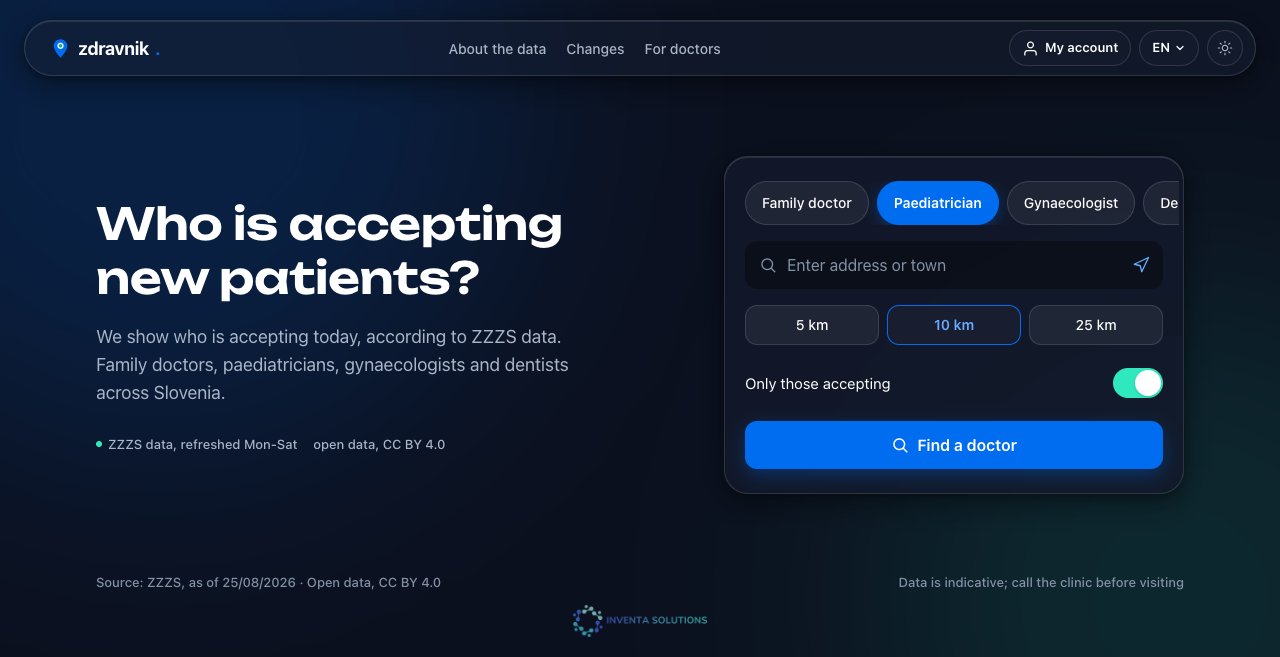
zdravnik.inventa.solutions. No registration, four languages, data from ZZZS under CC BY 4.0.
It downloads the official ZZZS files twice a day from Monday to Saturday, compares them with the previous day and keeps the history. You enter an address, choose a type of doctor and a radius, and see who is accepting right now, on a map, sorted by distance from you.
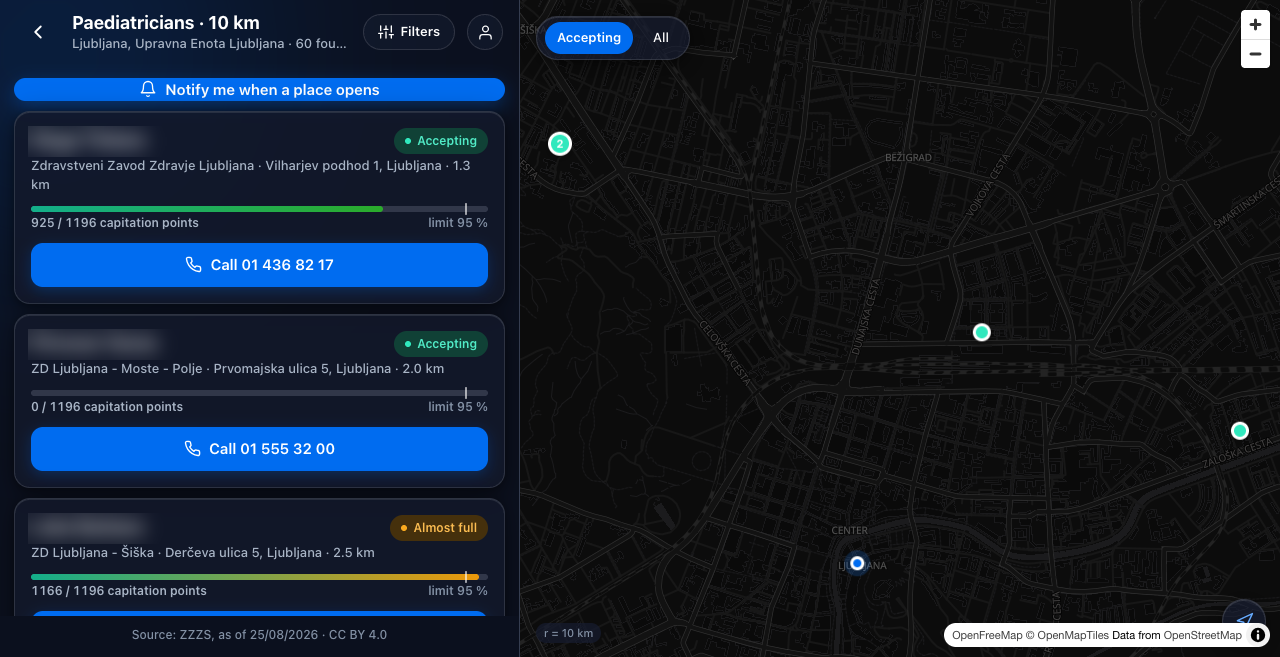
Each card shows the load against the legal threshold, so you can tell the difference between a doctor with real room and one who is five points from full. Anything above 95 percent of the limit is flagged as almost full.
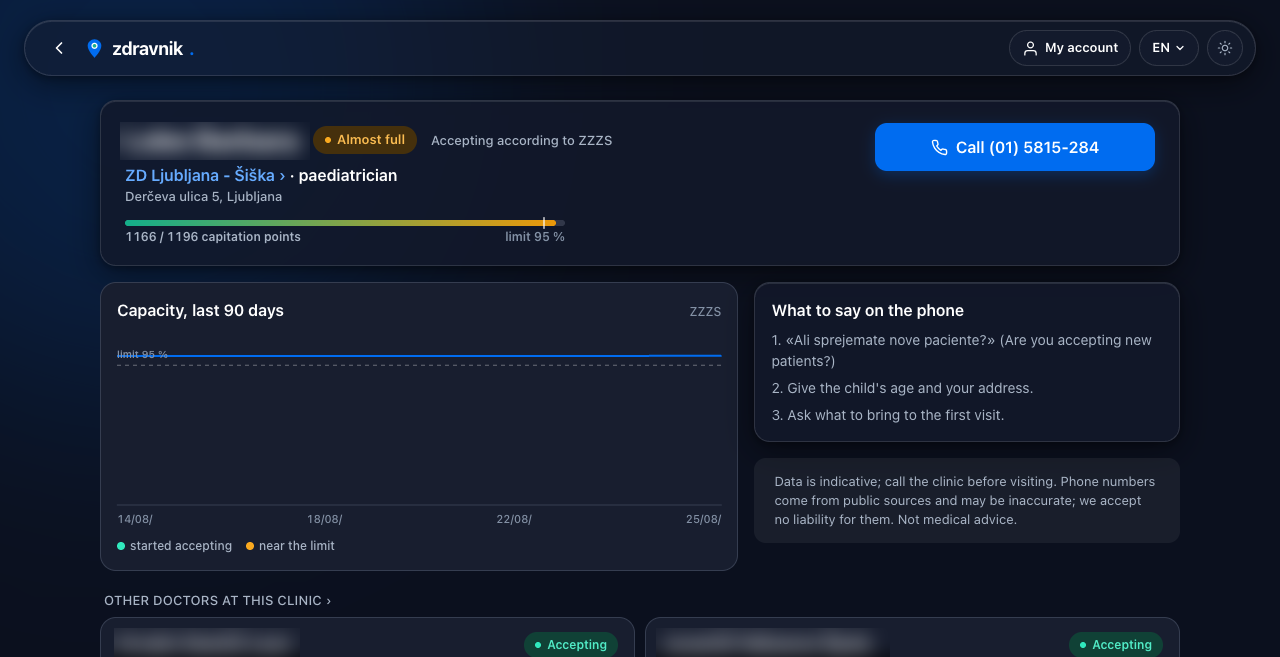
Each doctor also has ninety days of movement, so you can see whether a place opened once by accident or whether that clinic genuinely takes people. And there is a short script for the phone call in Slovenian, because for most newcomers the call is the frightening part, not the search.
The alert is the whole point
Searching is the part that already existed. The part that did not is being told. You subscribe once. Choose a type of doctor and either a radius around your home or a set of whole cities, and choose Telegram or email. When one of those doctors starts accepting, a message arrives with the clinic's phone number. Then you stop thinking about it.
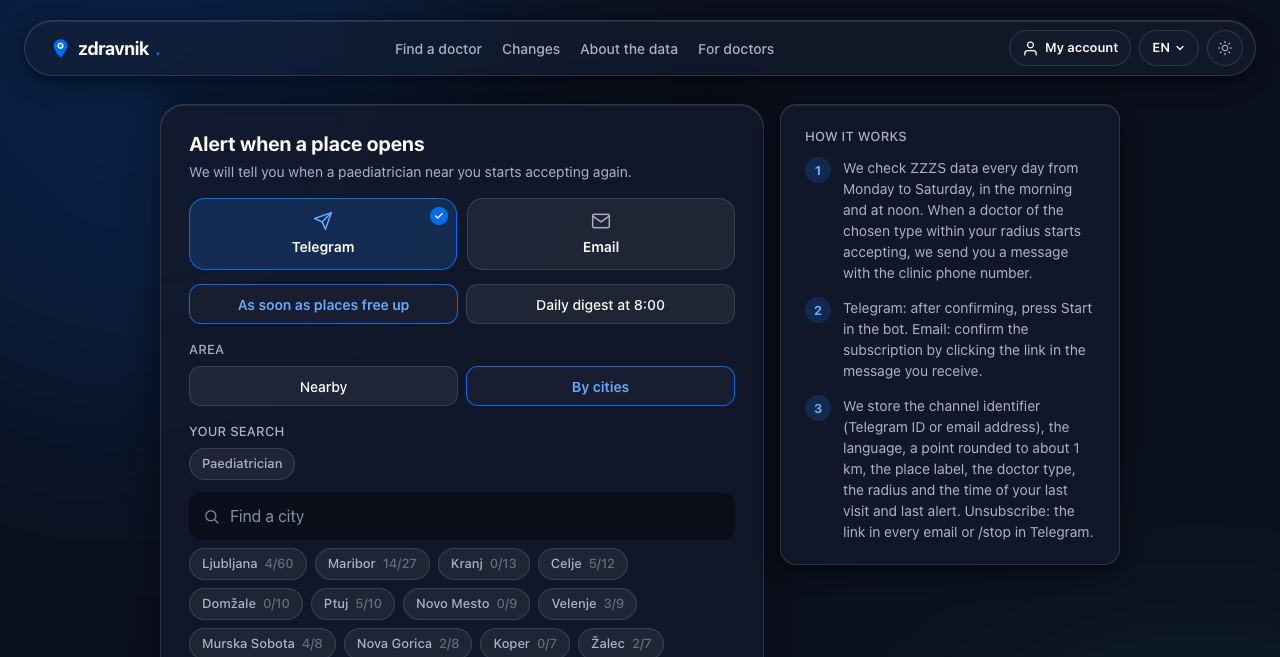
The city option exists because a reader asked for it. People are willing to drive for a paediatrician, and the cities they are willing to drive to are not always next to each other. That shipped within a day of being suggested.
Choose a type of doctor and a radius or whole cities, then get on with your life.
It runs in four languages
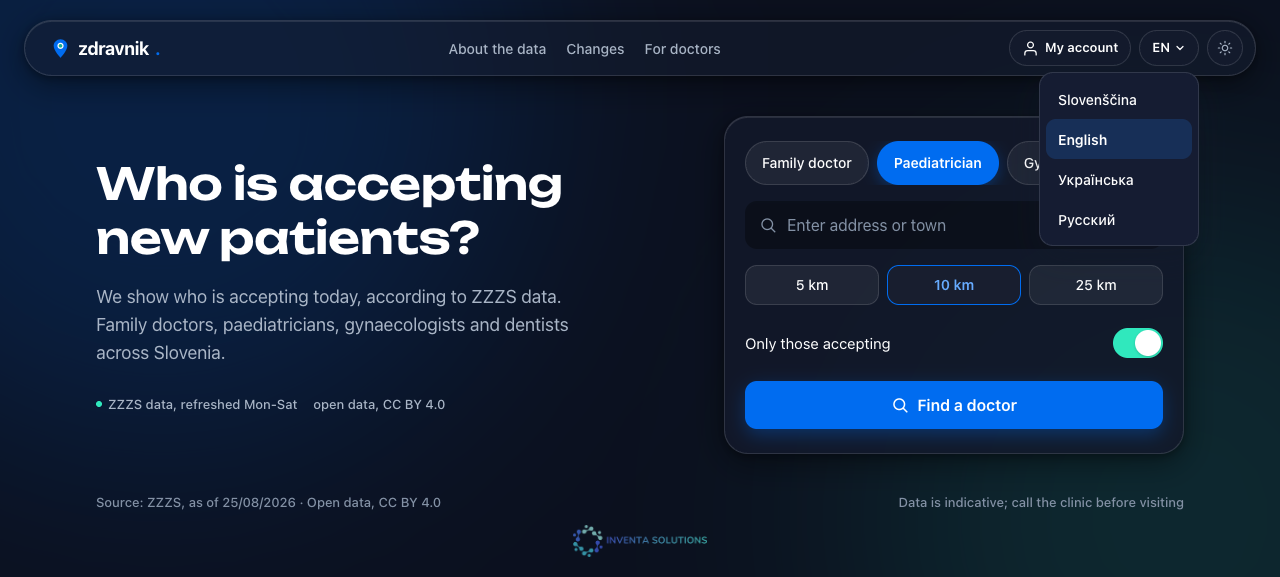
The people who need this most are the ones who arrived recently and are dealing with an administrative system in a language they are still learning. There are no passwords and no registration form. No fees, no ads, no analytics, and therefore no cookie banner. Your address is never stored as text: a subscription keeps a point rounded to about one kilometre, and nothing else.
What happened when I gave it away
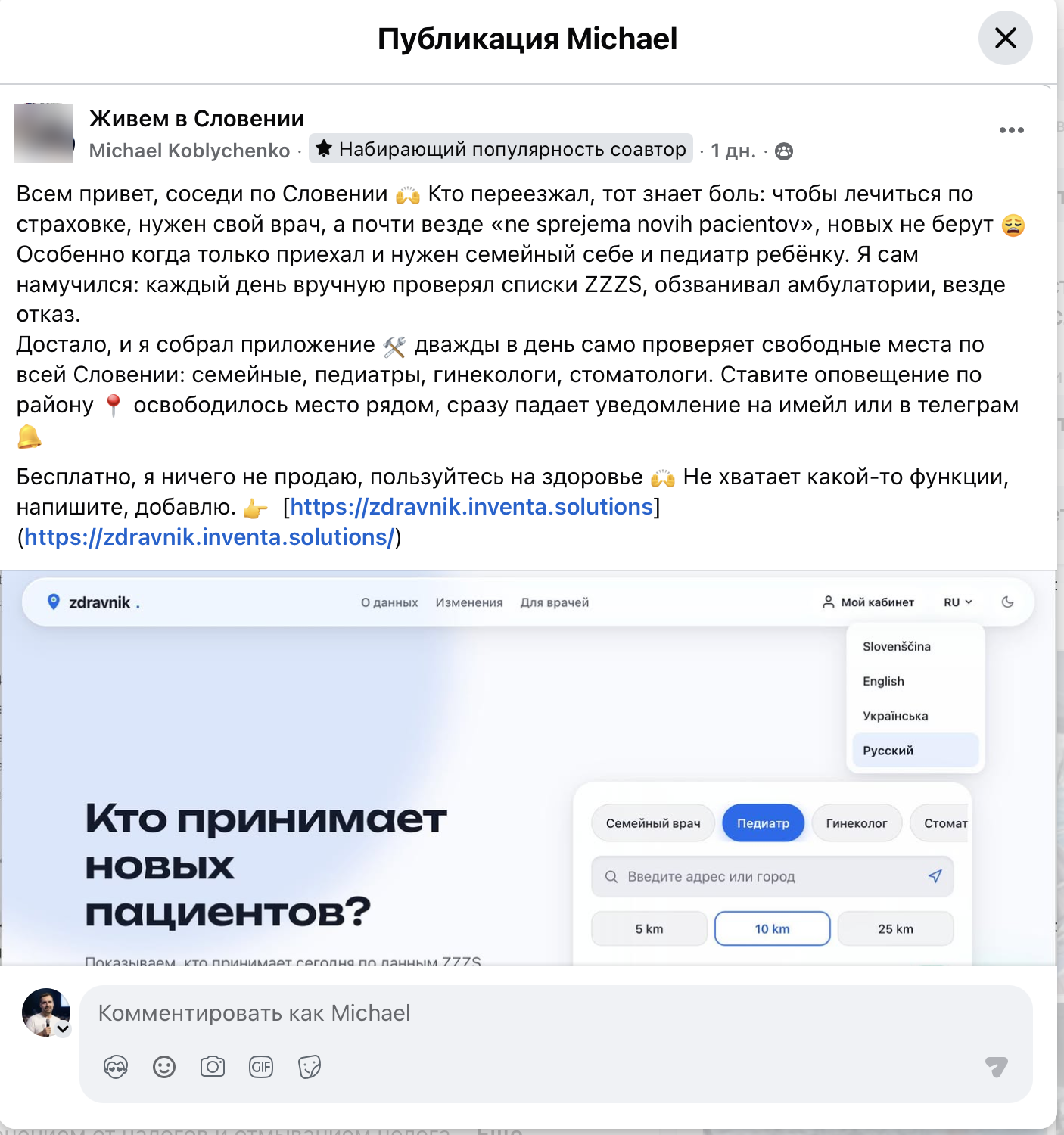
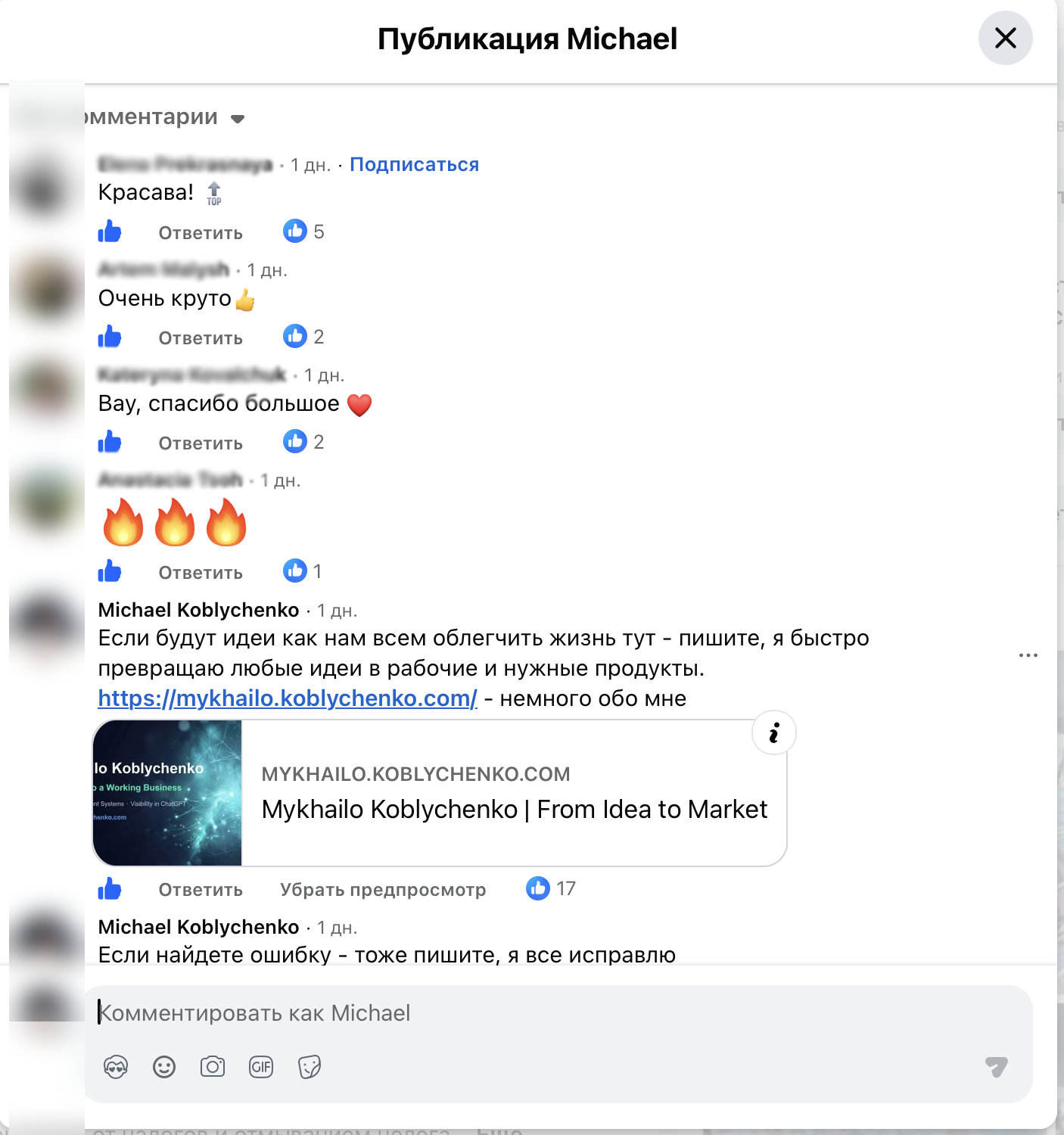
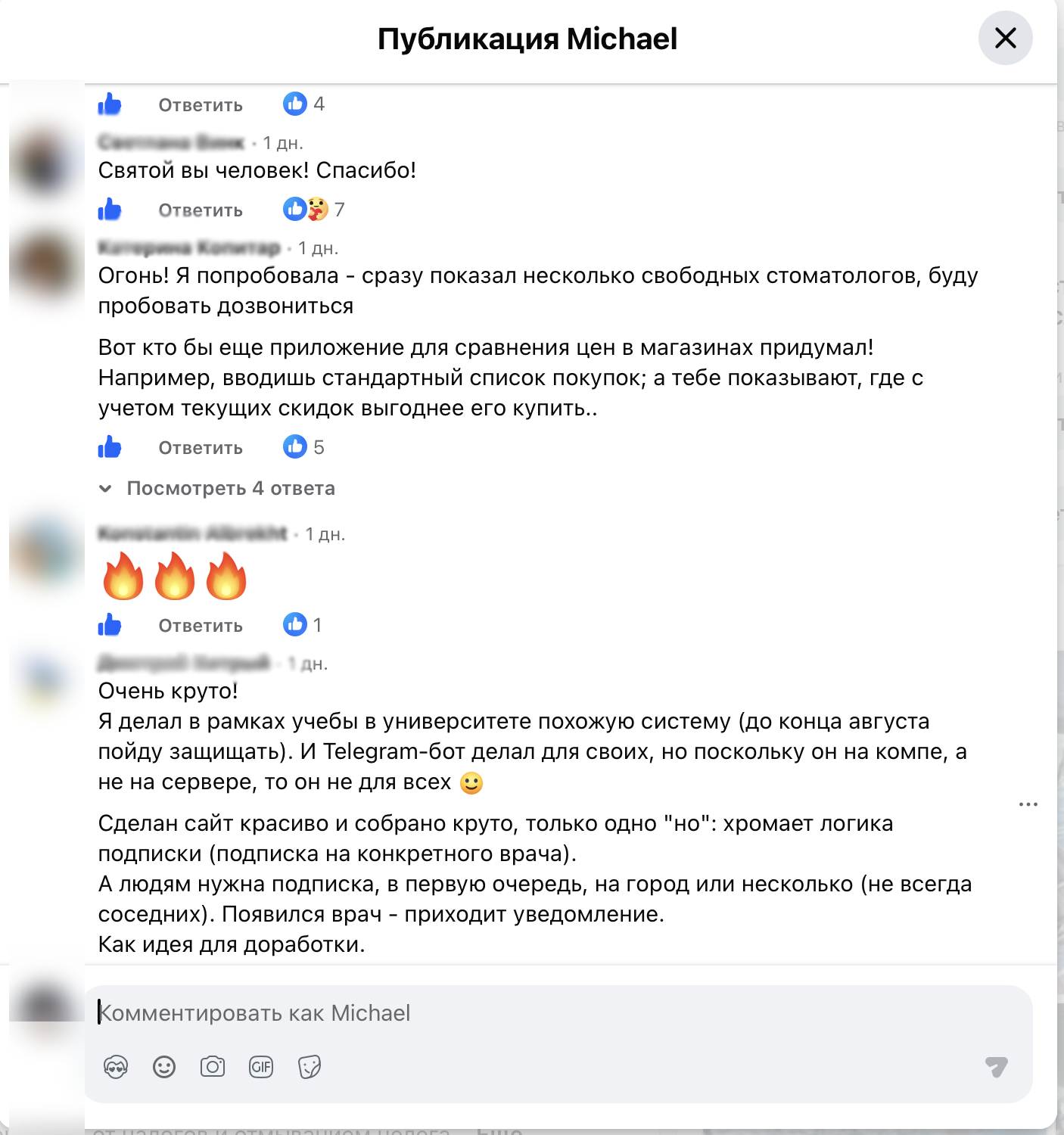
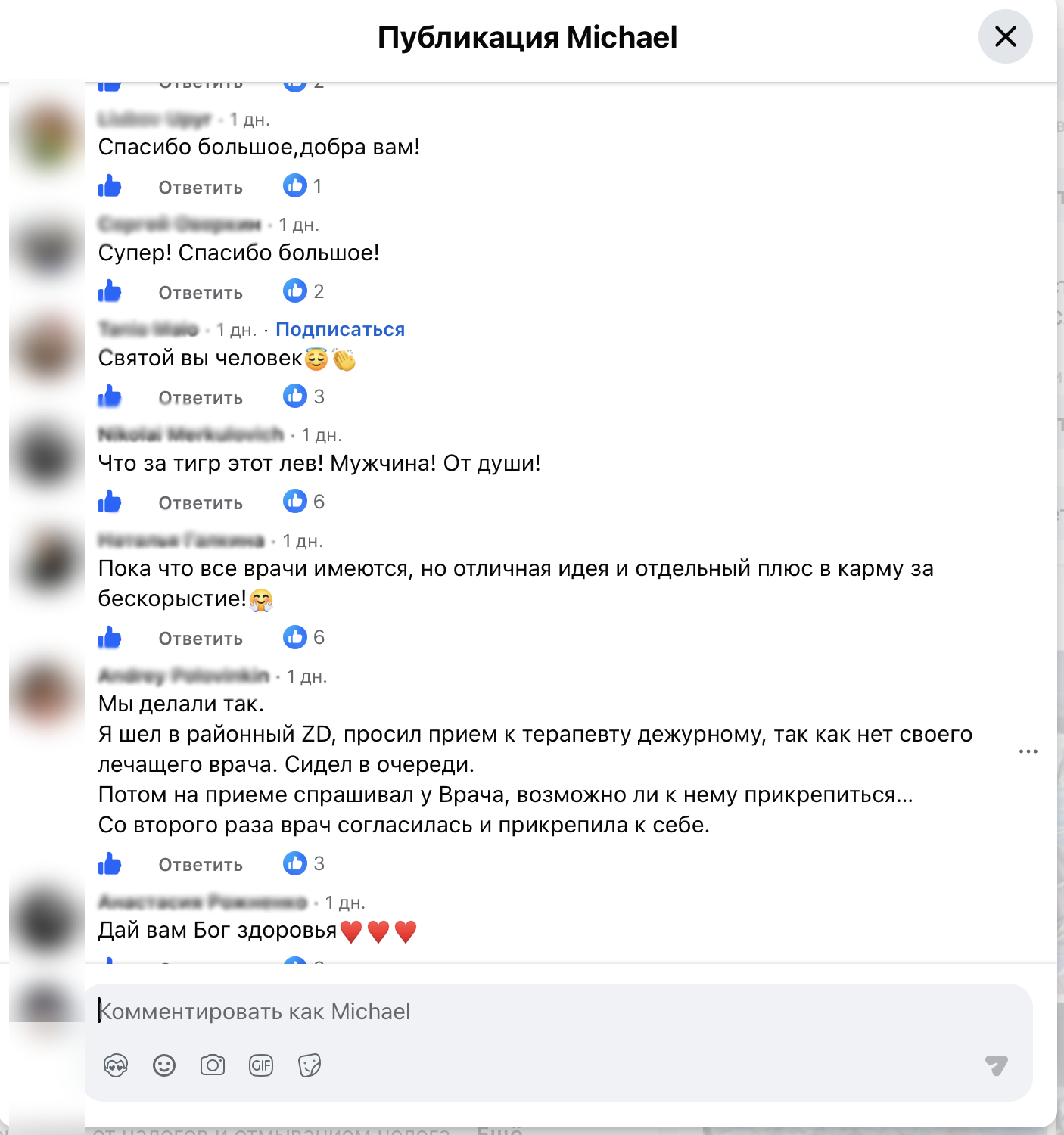
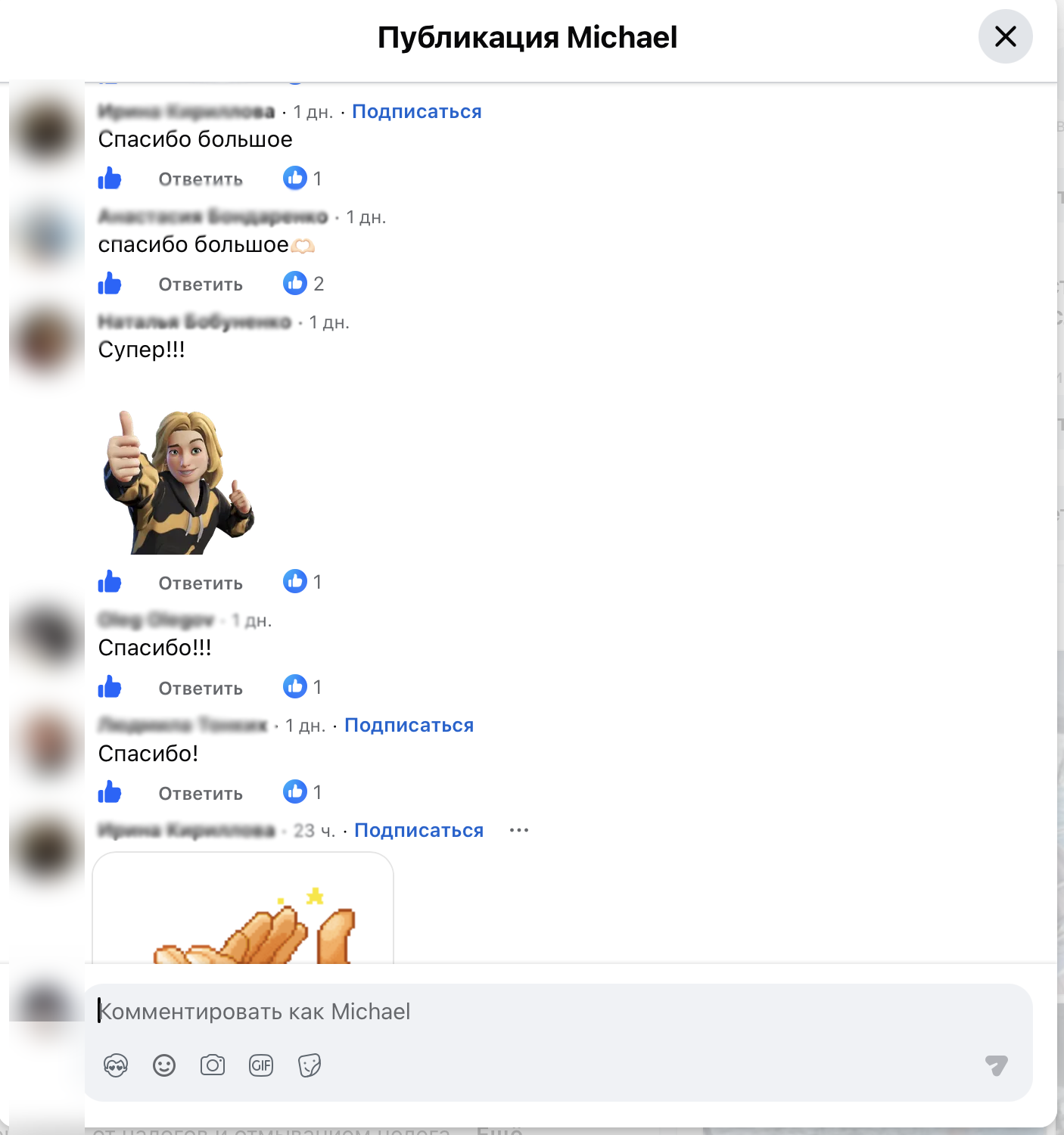
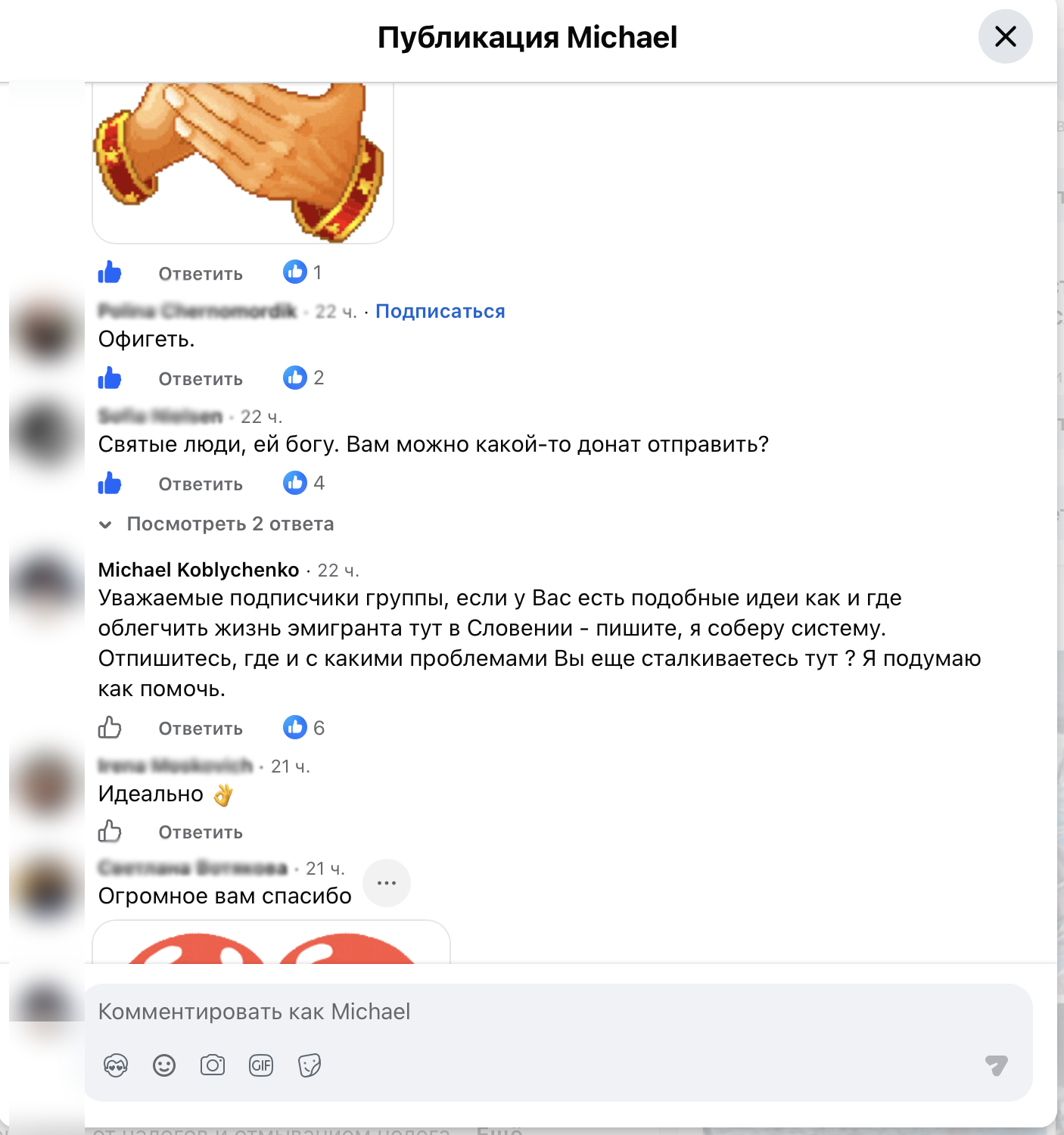
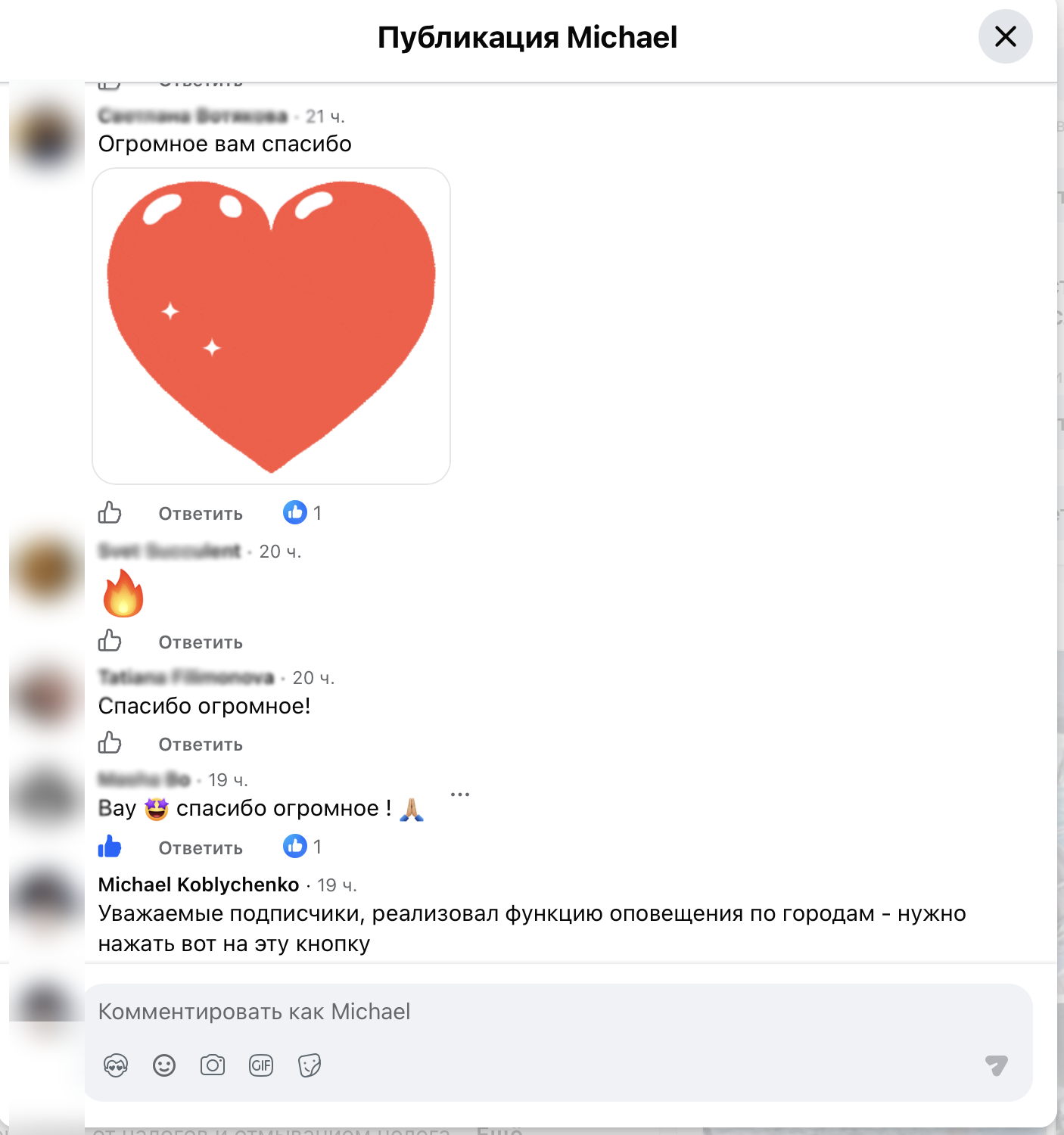
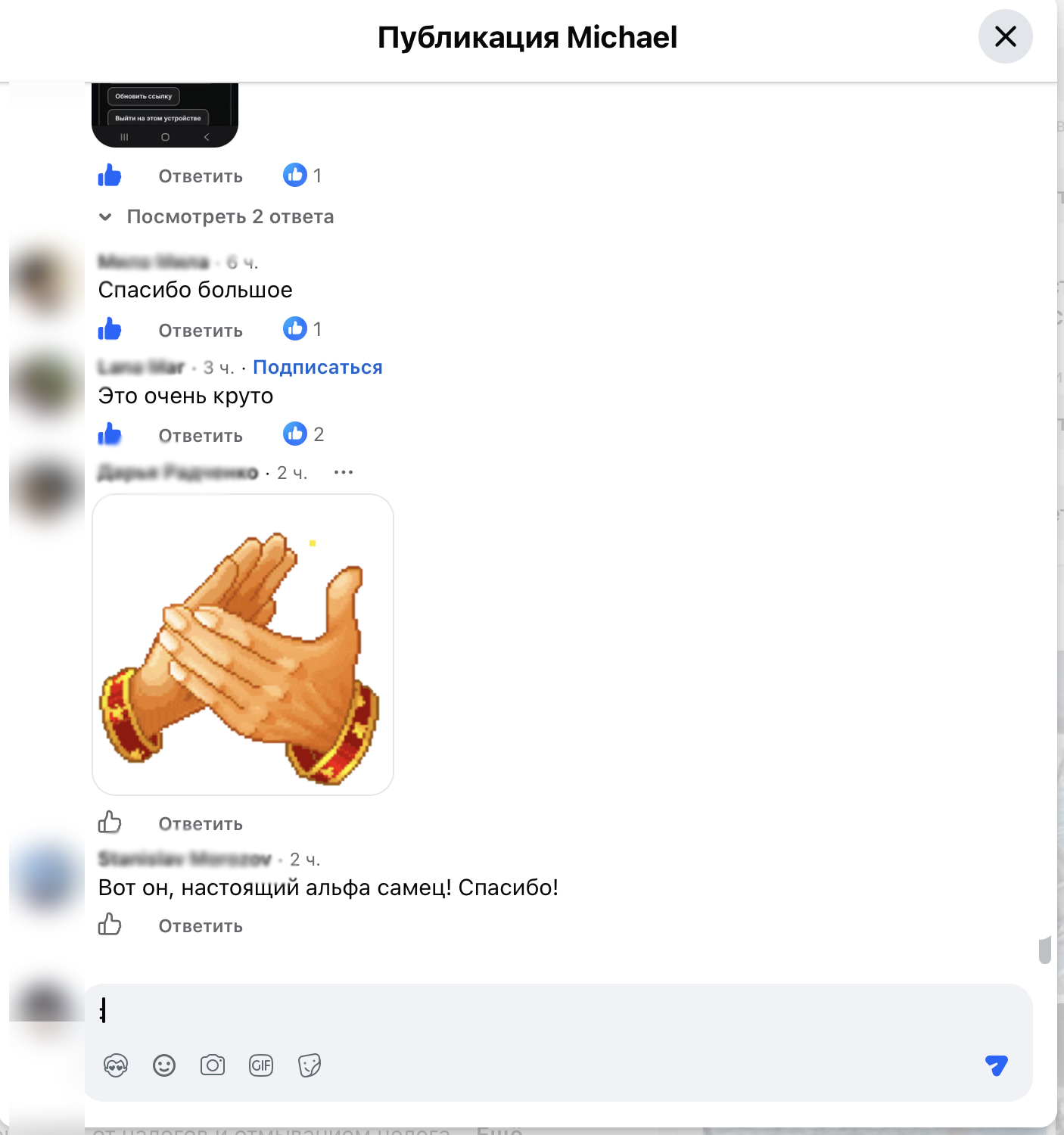
Once my daughter had her paediatrician I could have closed the laptop. Instead I posted it in a Facebook group for people who have moved to Slovenia. One post, no budget, nothing asked in return. It came back with 291 reactions and 53 comments, almost all of them thank yous. Names and faces below are blurred, the words are untouched.
Why it is free
I have been doing this kind of thing since 2011, when my home town had no volunteer organisation at all. It started because dogs were being poisoned in the city and I gathered friends to save them. Once we saw that it actually worked, it became park clean-ups, then beaches, then planting trees, then help for people with disabilities, then charity concerts with sponsors. It grew to about 150 people.
For fifteen years that help was manual. It cost my own hours and it stopped whenever I went to sleep. The only thing that has changed is that I can now build software, so the same instinct produces something that keeps working while I am not there.
I have built plenty of things for money and they were fine. The energy comes from somewhere else. I make something useful, a stranger I will never meet writes to say it helped, and in that moment I am not building a business. I am just living.
If you are looking right now
- Check the official ZZZS list first. It is the source, it is free, and everything else including my tool is downstream of it.
- Do not rely on one check. Places open and close within days.
- Call before you go, whatever any website tells you. The clinic is the only authority on whether they will take you.
- If you would rather not check every morning, subscribe to the alert and get on with your life.
Tell me what else is hard here
If you live in Slovenia and something ordinary is harder than it should be, something small that costs people days and that nobody has automated because there is no money in it, write to me and tell me what it is. If it can be built, I will build it.